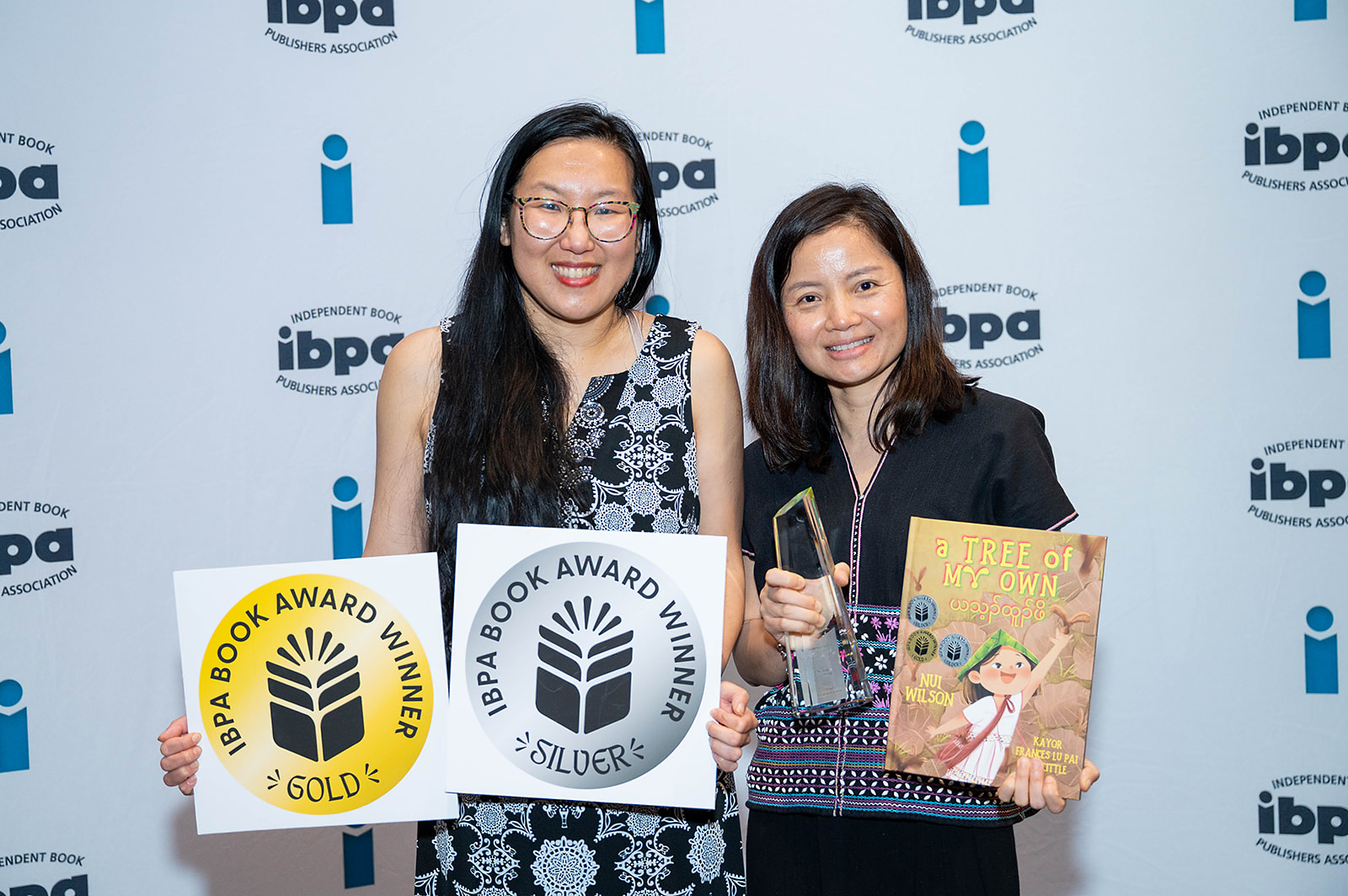
 When Qilin Press published its first book, it wasn’t building on an established model. It was creating one. Founded in 2023 by Frances Pai-Ippolito, the nonprofit press was designed around a simple but uncommon premise: Produce high-quality books and return the profits to the communities those stories represent.
Its debut title, A Tree of My Own, follows a Karen girl’s journey from Myanmar to a refugee camp in Thailand and ultimately to resettlement in the United States—one of the first children’s books to center the Karen refugee experience from a child’s perspective. The book earned a Gold and two Silver IBPA Book Awards, bringing wider attention not only to the story itself but to the community behind it.
From the outset, Qilin Press faced challenges that many independent publishers will recognize—finding the right collaborators, building distribution, and managing limited resources—but others were far less typical. Producing editions in Karen and Thai required overcoming technical barriers, including the lack of compatible fonts in standard publishing software, while the press’s nonprofit structure introduced its own operational complexities. Still, through a combination of mission alignment, community partnerships, and persistence, Qilin Press brought its first project to life and established a foundation for what comes next.
In the following Q&A, Pai-Ippolito reflects on what it took to launch the press, what she’s learned along the way, and how she defines success in a model where impact—not profit—drives the work.
Looking back, what felt like the biggest leap of faith in launching Qilin Press, and what helped you move forward anyway?
The biggest leap for me was believing that we could do something when everything was unknown. We had never seen a children’s picture book about the Karen American refugee experience. We had never made a children’s picture book. Nui Wilson, our author, had never written a book. I had never started and run a nonprofit. And no press I knew, nonprofit or otherwise, was designed and founded on the principle of not making money for the press. The money goes back to the community and back into making more books. We have no paid employees. We operate on donations and with volunteers.
These unknowns were also precisely the reasons we went ahead. There was no precedent for success. There was no precedent for failure. The odds were even and, at the end of the day, if we had a book we could give to the Karen American families, that was more than enough for my writer and Qilin Press.
As a nonprofit publisher, what assumptions did you have early on that turned out to be wrong? What did you have to rethink once you were actually in the publishing process?
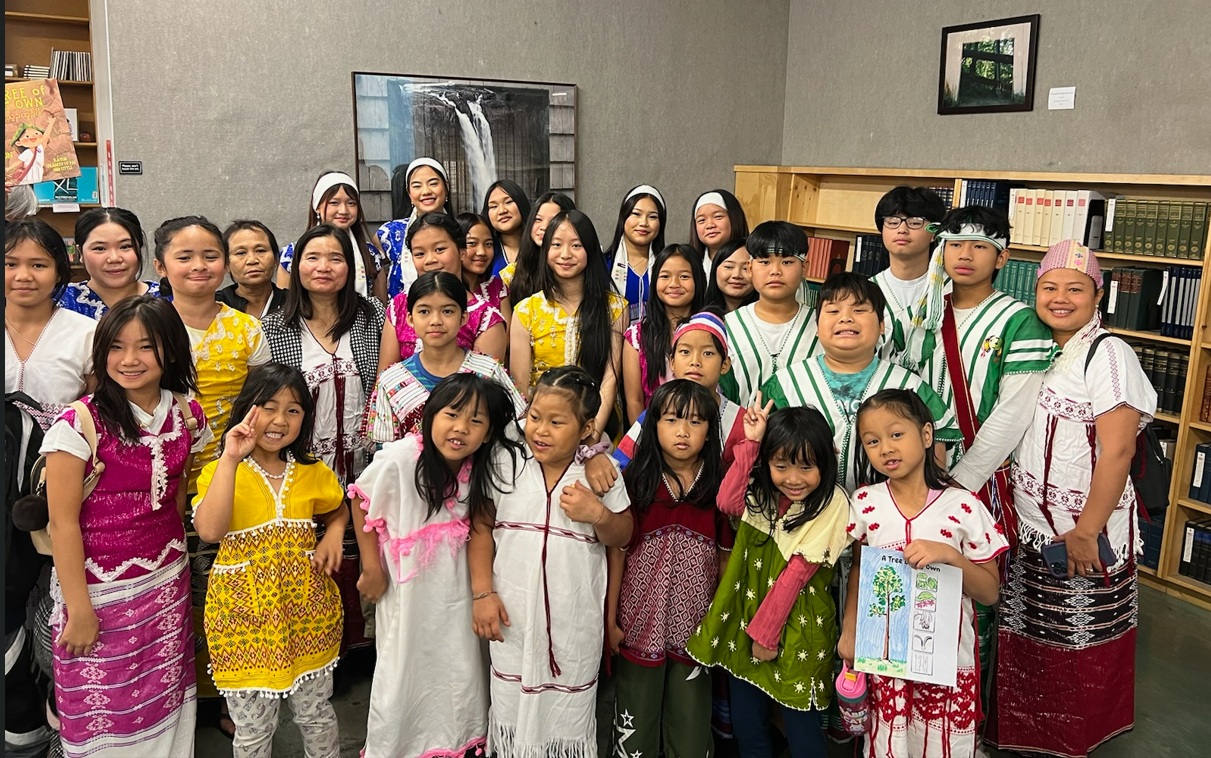 As a nonprofit, I thought that there would be less paperwork and more cost savings from our nonprofit status. There have been cost savings for sure. Many vendors and service providers will take into account the nonprofit status to provide modest discounts or free software access. Nonetheless, nonprofits have bylaws, reporting and tax requirements, and, of course, a governing board. In other words, this is a complex legal entity that is structured for oversight and transparent accountability by design and purpose. Alas, a good deal of paperwork. But it has been manageable.
How has being an IBPA member supported your journey as a publisher—either directly or indirectly?
Educators and librarians recognize that IBPA awards indicate a book has been reviewed, vetted, and determined to be exceptional. A Tree of My Own has now been taught in teacher workshops, at universities, and has been part of a collaboration with USA for UNHCR for World Refugee Day. We also met our distributor, East West Discovery Press, through IBPA. IBPA’s support has been a huge factor in raising awareness about this book and the Karen refugee community in America.
Language access was a major part of this project, from translation to font and design challenges. What advice would you give other publishers who want to publish in non-dominant or underrepresented languages?
Fonts. When a community is part of the longest ongoing civil war, and your people are displaced all over the world, it is unsurprising that there are challenges to preserving language, culture, and stories. From the publishing side, the layout software we used did not have a font for the Karen language. Nor did we find a font that could reliably be used with the software. As such, we had to manually draw and create letters when the software repeatedly deleted or altered text. It was painstaking work.
For publishers who want to publish in underrepresented languages, I would suggest finding a translator who can catch typos and explain the nuances of the script, especially when the layout is done by a designer who does not read the language. We have a wonderful relationship between our translator Lwe Wah Shee and designer Gigi Little, without which it would have been impossible to make the Thai, Karen, and bilingual versions.
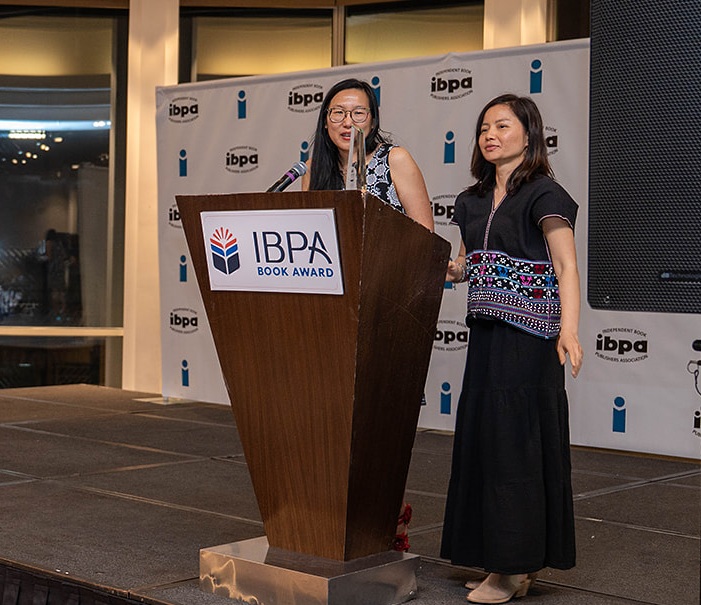 We also had a Thai-Karen illustrator based in Thailand. It was important to learn about international copyright issues and to have contracts in place for copyright protection, including translations of contracts for securing US copyright registration for both the text and artwork.
Because Qilin Press donates profits back to the communities it publishes about, success may look different than it does for a traditional press. How do you define “success” for Qilin Press today compared to when you first started?
Qilin Press isn’t a publisher so much as a storykeeper. When a community trusts us to share their stories, we do our best to honor that trust by making the best book we can. This is because we believe storytelling builds connection, understanding, and empathy across all communities. So, success is keeping the lights on long enough to make as many books as we can, while also supporting the communities who trust us to tell their story.
What systems, partnerships, or processes proved essential to getting this first book across the finish line? Is there anything you’d prioritize sooner if you were starting again?
Organizations with missions that overlapped with ours were invaluable partners. An alignment of mission and values meant that there was also an alignment of resources. For example, several partners promoted our book through their networks, which were much bigger and more established than ours. Our partners also made introductions to librarians and community leaders to help develop our network.
What’s one hard-earned lesson from your first book that is shaping how you approach your next Qilin Press projects?
We’ve learned to pace ourselves. It’s easy to get excited by all the possible projects we can take on. But because our goal is to spend as little as possible and donate as much as we can back, any way we can streamline processes, we do. For example, with the second book in the Karen series, we plan to start with a bilingual Karen-English version instead of separate versions. That’ll cut down on the mental load of managing multiple projects and free up time to do more promotion and marketing.
For other IBPA members considering mission-driven or nonprofit publishing models, what’s one piece of advice you wish you’d received earlier?
The question I asked myself and everyone in the beginning still applies: Can you commit 100% to the mission? If not, don’t go forward. If yes, remind yourself when the days are long and morale is low. The mission will guide you true.