 When people think of Raspberry Pi, they often think first of hardware: tiny computers, tinkering, and a global maker community. But over the past several years, Raspberry Pi Press has quietly built a publishing program that stands on its own—one rooted in education, design, and deep engagement with readers.
As part of a mission-driven technology organization, Raspberry Pi Press operates differently than a traditional stand-alone publisher. With a tightly defined focus, a small core team supported by in-house designers and engineers, and a publishing strategy shaped directly by community feedback, the press has grown a global list that extends beyond its core hardware ecosystem.
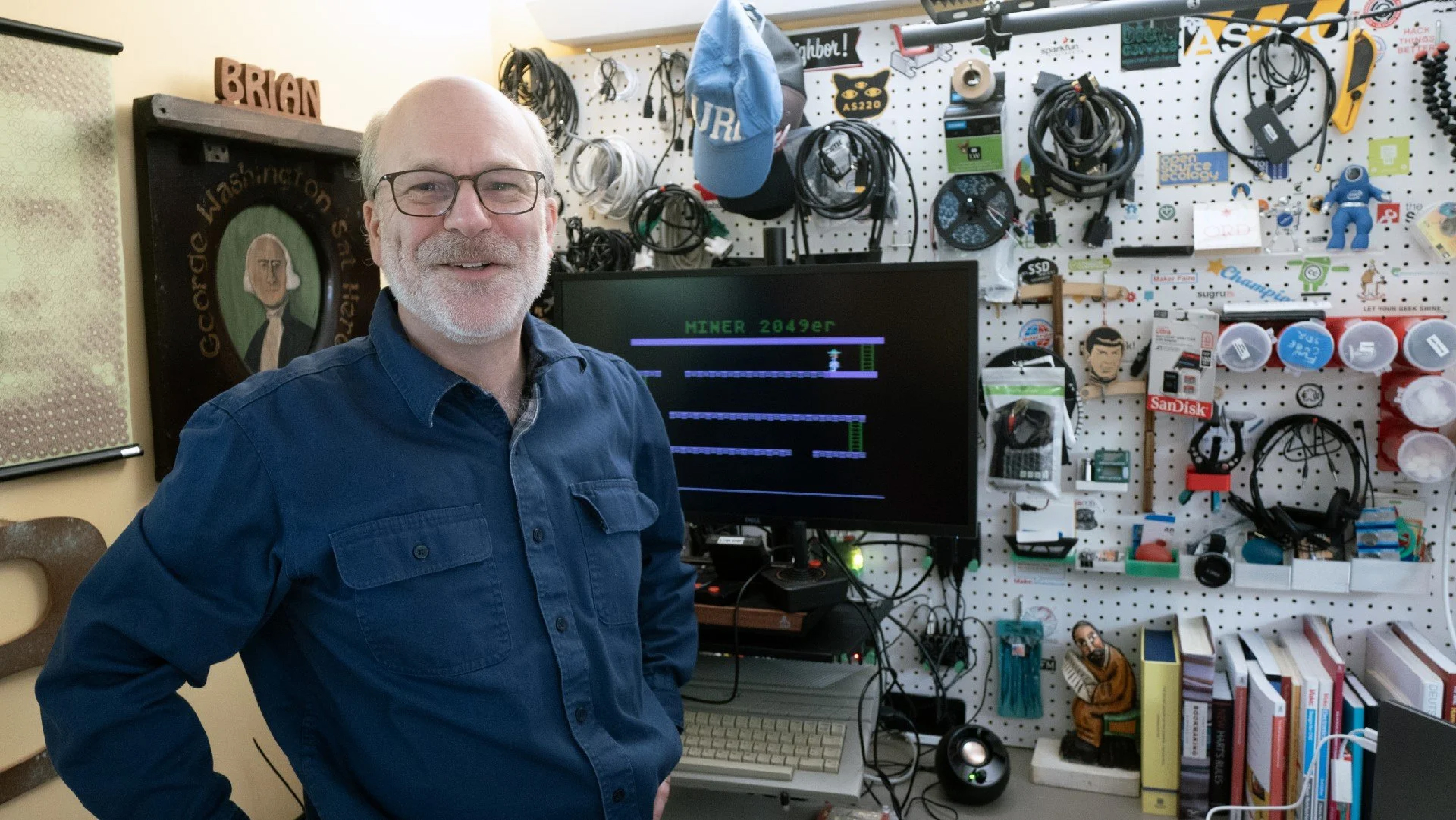
In this conversation, publishing director Brian Jepson shares how Raspberry Pi Press balances infrastructure and creativity, takes calculated risks on new audiences, approaches distribution and licensing, and what it means to publish books for a community you’re already part of.
What advantages—and constraints—come with publishing inside a mission-driven company rather than as a standalone press?
It certainly helps to refine my focus. I’ve worked at technical publishers in the past, and one of the challenges was triaging book proposals. Being part of Raspberry Pi Ltd gives me a very clear focus. We mainly focus on the world of Raspberry Pi-made computer hardware, accessories and software associated with that. But Raspberry Pi also loves vintage computers, retro video games, and the community that surrounds both.
Having that focus means I’m spending less time chasing software and hardware releases from the wider technology community. I don’t have to publish half a dozen books a year on the hot new programming language or chase hobbyist technology from a dozen different manufacturers.
Of course, the constraint there is that I might miss out on book sales on a hot new topic, but I often describe us as a boutique publisher. We’re small, we choose our opportunities carefully, and we spend a lot of time making the books look nice and feel nice in readers’ hands. That last part is made possible by our design team. I am the only person who works on books full-time, but I’m able to borrow our designers, illustrators, and photographers to create beautiful, full-colour, engrossing books.
Your publishing program began as a way to support Raspberry Pi users and has since grown into a robust global list. At what point did you realize the press had its own momentum and audience beyond the core hardware ecosystem?
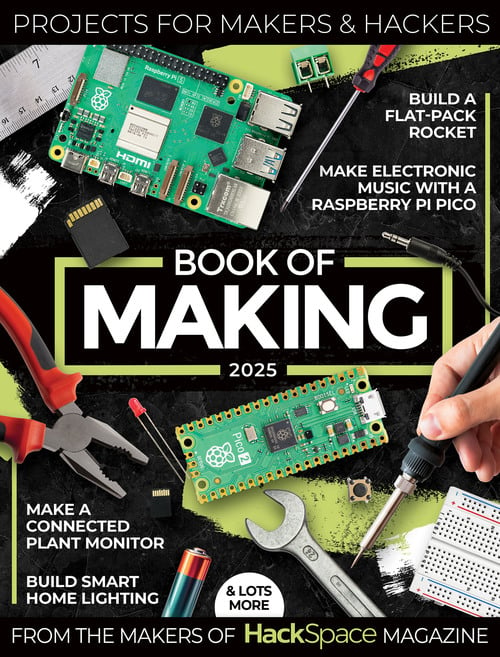 I was fortunate enough that this was established before I joined. We had two books that really had nothing to do with Raspberry Pi hardware: Code the Classics Volume I and The Computers that Made Britain. The first of these explores the history of popular video games from the 1970s and 1980s but also shows readers how to program their own modern versions of those classics. The Computers that Made Britain explores the history of popular computers in Great Britain from roughly the same period.
Although neither book was about Raspberry Pi, our founders, and many of my colleagues, found our passion as part of the 1980s home computing scene. Even though I’m American, I grew up around many of the computers mentioned in The Computers that Made Britain. My friends and I typed code listings from computer magazines into our computers to play video games that you couldn’t buy in stores, which is the experience we’re trying to share with readers of Code the Classics. Since I joined, we’ve followed up both books: The Computers that Made the World and Code the Classics Volume II.
You manage both operational efficiency and editorial scale, including in-house production systems. How important has infrastructure been to your success, and what lessons might other small or mid-sized publishers take from your approach?
Infrastructure is really what makes everything go. We have a software toolchain that takes in Word documents and artwork, and creates both print-ready PDFs and accessible ePUB files. If it wasn’t a toolchain made mostly of Python scripts, it would be a workflow, but it would still be infrastructure. With well-defined infrastructure, whether it’s the process you use to build your books or how you get books from your printer to readers, you’re not scrambling for a solution with each new book.
Although each book is different in many ways, they have so many common characteristics that it’s essential to be able to go through largely the same process each time. Eventually, many parts of the process become muscle memory, and we can focus our attention more on the content than the process.
Books like Unplugged Tots represent a strategic expansion into a new audience. What factors helped you evaluate that risk, and how do you decide when a departure from your core list makes sense?
In the case of Unplugged Tots, which is a book for parents and educators who want to introduce young kids to computer programming, it is a good fit for our mission. The first Raspberry Pi computer was intended to help encourage more students to study computer science, and of course it became much more. But it doesn’t change that we (Raspberry Pi Ltd as a company, but also the wider community) still need more young people to take an interest in this field.
It is certainly a risk publishing outside of the categories that you are known for, and the most important part of taking on this book was being committed to the extra work involved with getting the word out about it. People look to us for certain topics, but perhaps not parenting. That means we need to be ready to talk about the book a bit more, whether it be on social media, our blog, and even through a PR push.
Many IBPA members balance instructional publishing with creative or narrative work. How do you ensure your books remain accessible and engaging while still serving a clear educational purpose?
The most successful technical trade books have always been the ones that are the most engaging. They have to be different from textbooks and technical documentation, partly because technical trade books don’t have to be as exhaustive, but also because they have a wide audience. With a book like The Official Raspberry Pi Beginner’s Guide, we need to be accessible to young people as well as experienced professionals.
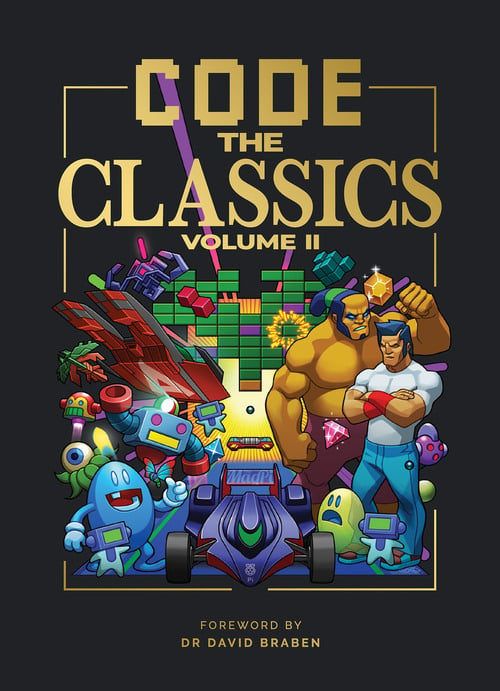 One of the luxuries we have at Raspberry Pi Press is that Raspberry Pi Ltd has long maintained some of the best documentation in the industry (https://www.raspberrypi.com/documentation/). Because of that, we have even less pressure to make our books cover every aspect of a topic. We don’t need exhaustive appendices or reference sections, because we have that covered in our docs.
We tend to work with writers who are comfortable writing magazine articles (in fact, we publish a magazine of our own: Raspberry Pi Official Magazine), online blogs, and social media. Our editors also have similar experiences, and we make an effort to include some fun and humor in our writing. I’ve been in technical trade publishing—first as a writer, then editor, and finally publisher—since 1994, and it’s always been an approach I’m comfortable with. Teach, of course, but also make the experience fun, engaging, and memorable for your readers.
Distribution plays a major role in your reach, from direct sales to global partners. What distribution decisions have had the biggest impact on your growth as a publisher?
When I joined Raspberry Pi, our distribution was fairly limited. We had one distributor, CBL Distribution Ltd, who sold our books in the UK and Ireland, and had limited distribution outside those territories. I decided we needed to expand our distribution, and contacted some folks at Ingram Content Group who I had worked with in the past. We were quickly steered to their PGW division, who is a perfect fit for us. They don’t just move our books from point A to point B, but they are an engaged partner who helps us reach as many readers as possible.
Your catalog often grows out of community engagement—magazine content, user feedback, and hands-on learning. How has listening to your audience shaped your publishing strategy?
Our forums (https://forums.raspberrypi.com/) are one of the first points of contact that a new user might have with the community, and in-person events (https://events.raspberrypi.com/) are a big part of that too. The forums and events have been with us since we started, and they are part of who we are as a company. You don’t have to look long to find threads going back to 2011 on our forum.
It’s difficult to imagine Raspberry Pi without this community engagement. We wouldn’t be the same company, and our products would be a lot less interesting. We can’t accommodate every request, suggestion, or complaint — but we listen, consider, and take them all to heart. The community feedback and conversation informs future editions of books, shapes our publishing roadmap, and teaches us something new every day. I keep a bookmark for our forums’ “Recent Posts” page and check it a couple of times a day. While most of the forum conversations are about something other than our books, there’s always some insight for me there.
How has being part of IBPA supported Raspberry Pi Press?
I find it refreshing to be part of an organisation that isn’t dedicated solely to technical publishing. Despite having some muscle memory around making engaging technical content, if we only kept the company of other technical publishers, we might find ourselves in an echo chamber and stagnate.
IBPA’s Slack, newsletters, social media, and other communications is reflective of the kind of diversity that exists in the real world. I don’t go into a book shop and spend all my time in the technical book section. It’s the wider diversity of voices and perspectives that makes a book shop visit special and I find that in IBPA as well.
What does success look like for Raspberry Pi Press over the next few years?
 It’s easy for me to say it’s sales growth, and that’s certainly part of it. One of the top things for me would be selling more translation rights. Raspberry Pi is a global phenomenon and our products are sold by a global network of resellers. We publish a limited number of translations of our Beginner’s Guide, specifically to support resellers (they sell the translations in localised Raspberry Pi kits). But we need more translations to support the global community of Raspberry Pi customers.
Although I’ve been in publishing for decades, I only visited Frankfurt Buchmesse for the first time in 2025. The only reason I did that was because we had a shelf of books in the IBPA booth. Although I didn’t have a booth of my own, I was able to piggyback a trip to Frankfurt on a trip I had already planned to the UK.
I would say for the next year or two, I’d really like to expand our translation reach through licensing. I know it’s not going to translate (sorry, pun irresistible) into a lot of revenue, but it’s important to our mission. Aside from that, we’ll keep expanding our catalogue with more titles, trying to make our books even better, and selling more!
What advice would you offer IBPA members who are exploring niche or mission-aligned publishing models rooted in communities outside traditional book audiences?
Although it may seem reasonable to assume that anyone who’s interested in publishing for a niche audience already has a connection to that audience, there are varying levels of connection.
You need to be part of the world you’re trying to reach. If your niche holds conferences or other kinds of gatherings, sponsor them, and exhibit. If they don’t have events, consider starting one. Lurk in the forums, Slack/Discord/etc. groups, but participate where you can. Immerse yourself in the topic, culture, and community.
I am fortunate in that, to a large extent, I’m a product of the community I’m publishing for. I have participated in events for makers and hobbyists such as Maker Faires, and have been co-producing a small Maker Faire (https://providence.makerfaire.com/) in my home state of Rhode Island since 2009. While Maker Faires aren’t only for people interested in computing, games, and little computers like Raspberry Pi, they are a place where such enthusiasts tend to congregate in large numbers.
If you can develop expertise and domain knowledge, it’s going to help, especially if it’s a technical topic. If you can’t do that yourself, you need someone senior with that knowledge and expertise to help shape your strategy. The technical publishers I respect the most are the ones who have taken this approach.